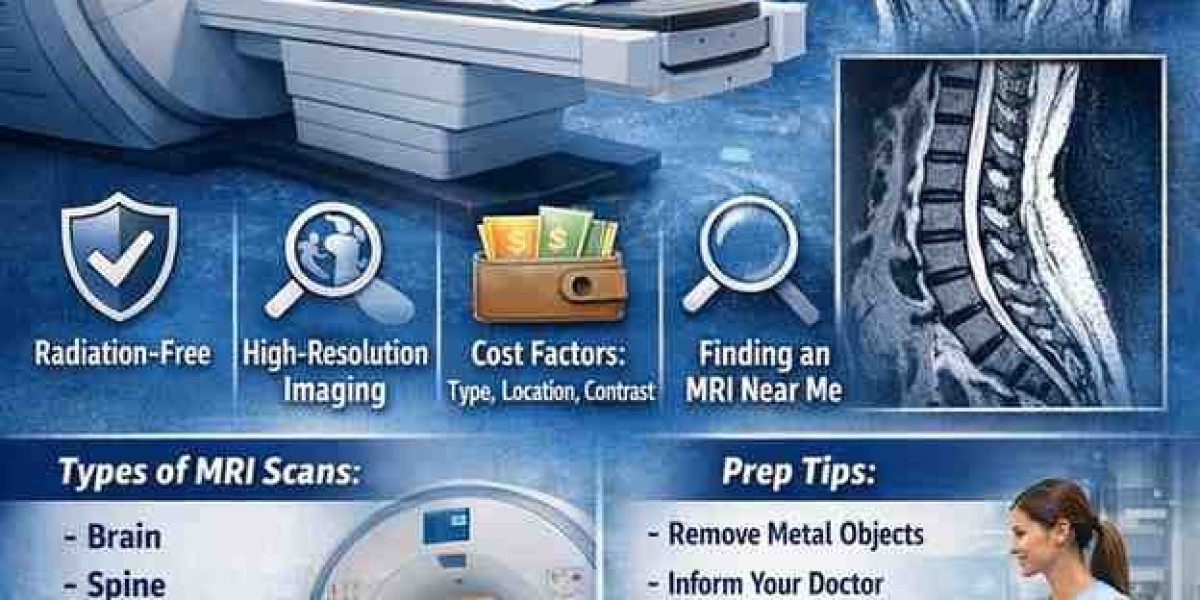
Magnetic Resonance Imaging (MRI) is one of the most advanced diagnostic imaging techniques available today. It helps doctors examine internal organs, soft tissues, bones, joints, and the nervous system in great detail without using harmful radiation. If your doctor has recommended this scan, you may be wondering about the MRI test price and how to find a reliable MRI near me for accurate and timely results.
In this comprehensive guide, we will explain what an MRI scan is, how it works, why it is performed, the preparation steps, the benefits, and the factors that influence the cost.
What Is an MRI Scan?
MRI (Magnetic Resonance Imaging) is a non-invasive imaging test that uses strong magnetic fields and radio waves to create detailed images of the inside of the body. Unlike X-rays or CT scans, MRI does not use ionizing radiation, making it a safer option for many patients.
MRI scans are commonly used to examine:
- Brain and spinal cord
- Joints (knee, shoulder, hip)
- Heart and blood vessels
- Abdomen and pelvis
- Soft tissues and muscles
- Tumors and infections
Because MRI provides high-resolution images, it is often recommended when other imaging tests do not provide enough clarity.
How Does an MRI Scan Work?
An MRI machine uses a powerful magnet to align hydrogen atoms in your body. When radio waves are applied, these atoms send signals back to the machine. A computer then processes these signals to generate detailed cross-sectional images of the scanned area.
The procedure typically takes between 20 and 60 minutes, depending on the area being examined. You will lie on a sliding table that moves into a cylindrical scanner. During the scan, it is important to remain still to ensure clear images.
Why Is an MRI Recommended?
Doctors may suggest an MRI scan for various medical conditions, including:
1. Brain and Neurological Conditions
- Stroke
- Brain tumors
- Multiple sclerosis
- Head injuries
- Seizures
2. Spine and Back Problems
- Slipped disc
- Spinal cord injuries
- Chronic back pain
3. Joint and Musculoskeletal Issues
- Ligament tears
- Sports injuries
- Arthritis
4. Abdominal and Pelvic Concerns
- Liver disease
- Kidney problems
- Uterine or ovarian conditions
MRI is especially helpful in diagnosing soft tissue abnormalities that are not easily visible on other imaging tests.
MRI Test Price: What Affects the Cost?
The MRI test price can vary depending on several factors. Understanding these factors can help you make an informed decision when booking your scan.
1. Type of MRI Scan
Different scans have different costs. For example:
- Brain MRI
- Spine MRI
- Whole-body MRI
- Contrast MRI
Contrast-enhanced MRI scans generally cost more because a special dye is used to improve image clarity.
2. Body Part Being Scanned
The area being examined can influence the price. A brain MRI may have a different cost compared to a knee or abdominal MRI.
3. Diagnostic Centre Location
MRI prices can vary depending on the city and locality. Urban centres may have slightly higher costs compared to smaller towns due to operational expenses.
4. Machine Technology
Centres equipped with advanced 1.5 Tesla or 3 Tesla MRI machines may charge more due to better imaging quality and faster results.
On average, the MRI test price in India can range from ₹3,000 to ₹12,000, depending on the factors mentioned above.
How to Find the Best MRI Near Me?
Searching for an MRI near me online can provide several options, but choosing the right diagnostic centre is important for accurate results. Here are some tips:
Check Accreditation
Choose a diagnostic centre that follows proper safety standards and has certified radiologists.
Review Technology
Modern MRI machines provide clearer images and shorter scan times.
Compare Prices
While affordability is important, quality should not be compromised.
Check Patient Reviews
Online reviews can help you understand patient experiences and service quality.
MRI Scan Preparation Guidelines
Proper preparation ensures smooth and accurate scanning.
Before the Scan:
- Inform your doctor if you have any metal implants, pacemakers, or surgical clips.
- Remove all metallic objects such as jewellery, watches, or hairpins.
- Inform staff if you are pregnant.
- You may be asked to avoid food for a few hours if contrast is used.
During the Scan:
- Remain still for clear imaging.
- You may hear loud tapping noises; earplugs are usually provided.
- Inform the technician if you feel uncomfortable or claustrophobic.
After the Scan:
- You can resume normal activities immediately unless instructed otherwise.
Benefits of an MRI Scan
MRI has several advantages compared to other imaging tests:
No Radiation Exposure
MRI uses magnetic fields instead of harmful radiation.
Detailed Soft Tissue Imaging
It provides superior imaging of soft tissues, ligaments, and organs.
Early Disease Detection
Helps detect tumors, nerve damage, and internal injuries early.
Non-Invasive
No surgical procedure is required.
These benefits make MRI one of the most trusted diagnostic tools worldwide.
MRI With Contrast: Is It Necessary?
Sometimes, doctors recommend an MRI with contrast to get more detailed images. A contrast dye (usually gadolinium-based) is injected into a vein to highlight certain tissues or blood vessels.
Contrast MRI is commonly used for:
- Tumor detection
- Inflammation
- Blood vessel abnormalities
- Detailed brain imaging
Although slightly more expensive, contrast MRI improves diagnostic accuracy in many cases.
Is MRI Safe?
MRI is considered very safe for most people. However, because it uses strong magnetic fields, it may not be suitable for patients with:
- Pacemakers
- Cochlear implants
- Certain metal clips or implants
Always inform your doctor and technician about any medical devices or implants before the scan.
How Long Does It Take to Get MRI Results?
Typically, MRI reports are available within 24 to 48 hours. In emergency cases, results may be provided sooner. A radiologist analyzes the images and prepares a detailed report for your doctor.
When Should You Get an MRI?
You should consider an MRI if:
- You have unexplained chronic pain.
- Other imaging tests did not provide clear results.
- Your doctor suspects nerve, joint, or organ damage.
- You have neurological symptoms such as dizziness, weakness, or seizures.
Early diagnosis helps in effective treatment and better recovery outcomes.
Tips to Reduce MRI Test Price
If you are concerned about cost, consider these tips:
- Compare prices at different diagnostic centres.
- Ask about health packages or discounts.
- Check if your health insurance covers MRI scans.
- Book appointments during promotional offers.
Balancing affordability with quality ensures accurate diagnosis without financial stress.
Conclusion
MRI scans play a crucial role in modern medical diagnosis by offering detailed, radiation-free imaging of internal organs and tissues. Whether you are investigating chronic pain, neurological symptoms, or joint injuries, an MRI provides precise and reliable results. Before scheduling your scan, it is wise to compare the MRI test price and search for a trusted MRI near me to ensure quality imaging at an affordable cost. Choosing the right diagnostic centre can make a significant difference in both accuracy and overall healthcare experience.