There are schools that prepare children for exams.
And there are schools that prepare children for the world.
At The Green School Bangalore, education is not treated as a timetable of subjects—it is treated as a moral architecture. A structure built on voice, responsibility, energy, justice, and reflection. The three conversations unfolding across our campus this week—around education, clean energy, and peace—are not separate lessons. They are chapters of the same story.
SDG 4: When Education Is Not Just Attendance, But Voice
Across Schools in Bangalore, conversations about quality education are evolving. Attendance, infrastructure, and examination results matter—but they are not sufficient. A child can attend school every day and still remain educationally poor if they are never taught how to question, reflect, or think independently. True educational poverty is not the absence of classrooms; it is the absence of voice.
Inspired by the courage of Malala Yousafzai, students today are encouraged to understand a deeper truth: education is not only access—it is agency. When children are empowered to speak, challenge assumptions, and explore ideas beyond textbooks, they transition from passive recipients of information to active participants in society.
In progressive Schools in Bangalore, including some of the top 3 schools in bangalore, educators increasingly ask a defining question:
Are we teaching children what to think, or how to think?
Because education without voice creates compliance.
Education with conscience creates leadership.
This is the essence of SDG 4—Quality Education—not as a statistical target, but as a lived classroom experience.
SDG 7: When Clean Energy Becomes Human Dignity
In many parts of the world, the deadliest energy source is not a distant power plant—it is the smoke inside homes where families cook daily. That insight shaped the life work of Wangari Maathai, whose environmental activism was never just about planting trees—it was about restoring dignity to communities.
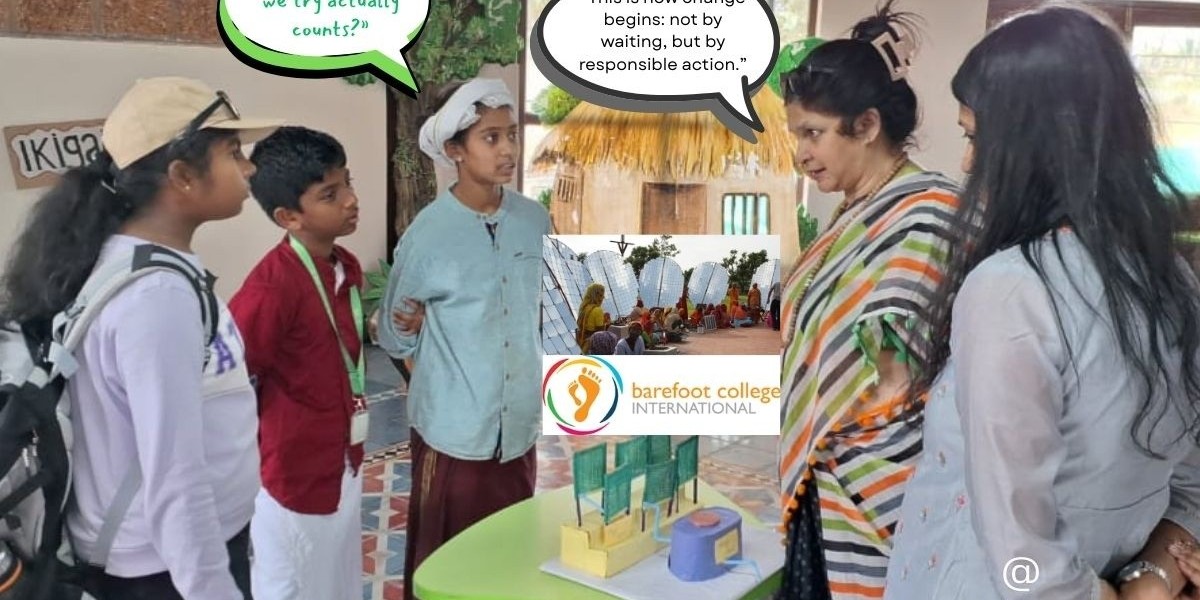
In forward-thinking Schools in Bangalore, sustainability is not confined to textbook chapters. Students tending to gardens, building solar-powered prototypes, or studying renewable systems are learning that clean energy is not an abstract policy term. It is about health, equity, and justice.
Renewable energy is not merely about reducing carbon emissions. It is about ensuring that communities historically excluded from the “energy conversation” are finally seen and heard.
When a child plants a sapling or experiments with solar heat:
They are understanding interdependence.
They are recognising how energy decisions affect air, water, and public health.
They are connecting sustainability with human rights.
Among the Top 5 best school in bengaluru, environmental literacy is becoming a foundational competency. Sustainability shifts from a slogan to a responsibility.
SDG 16: When Peace Requires Courage
A nation can have no active war and still lack peace.
The legacy of Nelson Mandela reminds us that peace is not the absence of conflict—it is the presence of justice. Laws can exist and still be inequitable. Systems can function and still exclude. Real peace begins when individuals confront injustice with integrity and rebuild trust through dialogue.
Within leading Schools in Bangalore, peace education is not a ceremonial topic reserved for annual assemblies. It is woven into:
Classroom discussions
Student parliaments
Peer mediation practices
Reflective dialogues on fairness and accountability
Children learn that avoiding difficult conversations does not create harmony—engaging respectfully does.
This is how institutions cultivate future citizens who understand that justice is not theoretical. It is participatory.
Several of the top 3 schools in bangalore now embed SDG-driven learning within civic education frameworks, helping students internalise that peace demands courage, not convenience.
One Philosophy. Three Pillars.
Quality Education. Clean Energy. Peace & Justice.
Three global goals. One integrated philosophy.
At The Green School Bangalore, these Sustainable Development Goals are not decorative icons placed on a website. They are operational commitments embedded in pedagogy.
Education gives children voice.
Sustainability gives them responsibility.
Justice gives them courage.
Together, they cultivate something more enduring than academic performance:
ethical intelligence.
In the landscape of Schools in Bangalore, institutions that align learning with global responsibility are redefining what it means to be among the Top 5 best school in bengaluru. Excellence is no longer measured only by rankings—but by relevance.
The True Connotation of Education
For parents evaluating Schools in Bangalore, including the top 3 schools in bangalore, the definition of quality education is gradually shifting. It is no longer confined to:
Examination scores
Competitive placements
Infrastructure metrics
Instead, it encompasses:
Systems thinking
Environmental consciousness
Moral reasoning
Empathy-driven leadership
Education, in its truest form, is not preparation for tests.
It is preparation for complexity.
And complexity demands:
Thinkers who analyse.
Carers who empathise.
Citizens who participate.
When schools cultivate reflective dialogue alongside academic rigour, they prepare students not merely for university admissions—but for societal contribution.
A Future Built With Intention
The future will not be sustained by information alone.
It will be sustained by wisdom.
Wisdom emerges in classrooms where children are trusted to:
Question bravely
Act responsibly
Think independently
Engage ethically
Across Schools in Bangalore, especially those aspiring to be recognised among the Top 5 best school in bengaluru, this shift toward SDG-aligned education signals a broader transformation.
Children no longer see the world as something to inherit passively.
They begin to see it as something to shape actively.
That is the promise of SDG 4, SDG 7, and SDG 16.
And that is the daily practice at The Green School Bangalore—where education is not just attendance, but voice; not just curriculum, but conscience; not just success, but significance.