First of all, the concept of blastocyst culture. We perform embryo culture in standard IVF procedures which follows the fertilization of eggs for three days. A healthy human embryo reaches six to eight cells by its third day of development. And traditionally, that's the day when we transfer embryos back into the uterus with a tiny catheter.
Now, there has been an alternative concept around called blastocyst stage transfer, originally developed by colleagues in Colorado, who claimed that if we culture embryos two days longer to day five, by which day good embryos have reached that blastocyst stage, which is the stage before embryos hatch out of the capsule in which they are. And at that stage, the number of cells is too large to be counted. They claim that those embryos have better implantation and therefore pregnancy rates. And they were at least to a degree correct in that claim. Because the longer we culture embryos, the better, in a way, we are selecting out the quote-unquote strongest. In other words, the less powerful embryos don't make it. They collapse to their own. They arrest. They die on the way. The embryos that make it to day five, to blastocyst stage, they then, because they are the strongest, if transferred, they will have higher pregnancy chances than embryos that are transferred on day three. Difference is not huge, but this difference is significant.
So superficially, this looks like a very smart concept because it allows selection of the strongest, the best, and therefore will give you, per embryo transfer, the highest pregnancy chances. Except that like so many times in medicine, good ideas or ideas that seem very smart and very logical, when you look more carefully, have unintended consequences. And there are very significant unintended consequences.
And this is a very good example why we have to be very careful in adding on to our now very successful IVF procedure. Because as it turned out, while the concept is basically correct that culturing embryos lasts long or selects out the strongest ones, it turns out that that concept mathematically improves pregnancy chances only in a small group of patients, namely so-called very good prognosis patients. Those are usually young women.
They are having normal ovarian function. They produce large egg and embryo numbers. In them, selecting out the strongest embryos makes sense. But in women who don't fall into this very good prognosis group, this process of selecting either makes no outcome difference or at the other opposite, in women who are poor prognosis patients, and those are usually older women and women with very few or relatively few eggs and embryos, actually the process diminishes pregnancy chances. One may ask, how can that be? The answer is very difficult. Nothing we do in medicine comes for free.
We always pay a price. Every treatment has downsides. We take aspirin, you can get a stomach bleed. We always, when we give treatments, have to calculate risk and benefit. And if the benefit outweighs the risk, then we have a good treatment at hand. And the same process needs to be applied here. And as it turns out, here is what's happening in regards to blastocyst stage transfer. The price we pay for improving embryos, for selection of strongest embryos, is that on the way between day 3 and day 5, some good embryos, which if they had been transferred on day 3 into the uterus, might still have given a completely normal pregnancy and led to the delivery of a healthy baby, they will die off. They will arrest. They will not make it to day 5. So, there is a loss of good embryos. And that's one price we pay by culturing out.
Now, if this happens in a young woman who has lots of embryos, losing one or two embryos is no big deal. She still will end up with lots of actually well-selected embryos. But if this happens in a woman who has very few embryos, you can see how suddenly in that woman it will affect her pregnancy chances negatively. And that's exactly what is happening.
And that has been shown in studies where investigators have taken a whole cohort of embryos that was obtained from one egg retrieval. And they have either transferred embryos only on day 3 or transferred embryos only on day 5. And after all embryos from this cohort were transferred, they calculated what's called the cumulative pregnancy chance from all of these embryos that were obtained from one IVF site. And here's the big surprise.
Uniformly, even in good prognosis patients, cumulative pregnancy rates were significantly higher with day 3 transfers than with day 5 transfers. And therefore, we have a dilemma to deal with in IVF now. If our goal is, in a patient, to give her cumulatively the highest pregnancy chance from one IVF site, there is no question every patient should be transferred on day 3. But if we have patients who have great numbers of embryos that they may never need, then obviously the question is a different one.
Then the question is, okay, how do we get this patient pregnant the quickest? And then there is an indication for blastocyst-stage transfer. But the patients who will benefit in this way from a blastocyst-stage transfer will always be a small minority. The majority will come out equal, but will end up with additional cost because obviously culturing embryos for two more days is more expensive.
And as I said, also a small minority will actually reduce their pregnancy chances. So, the beneficiaries from this procedure, which now unfortunately is becoming vogue and is being done increasingly routinely on everybody, the beneficiaries are a small group. How big that group is will depend on what kind of patients the centre serves.
If you have young patients, primarily the group may be a little larger. If it's a centre like ours, which usually has much older patients and patients who are usually poor prognosis patients, that group will be very small. But even in the best of centres, it's probably not more than 20% of the total patient population.
So, this is one very good example where we feel that current trends in the U.S., but also in other countries, do not make much sense.
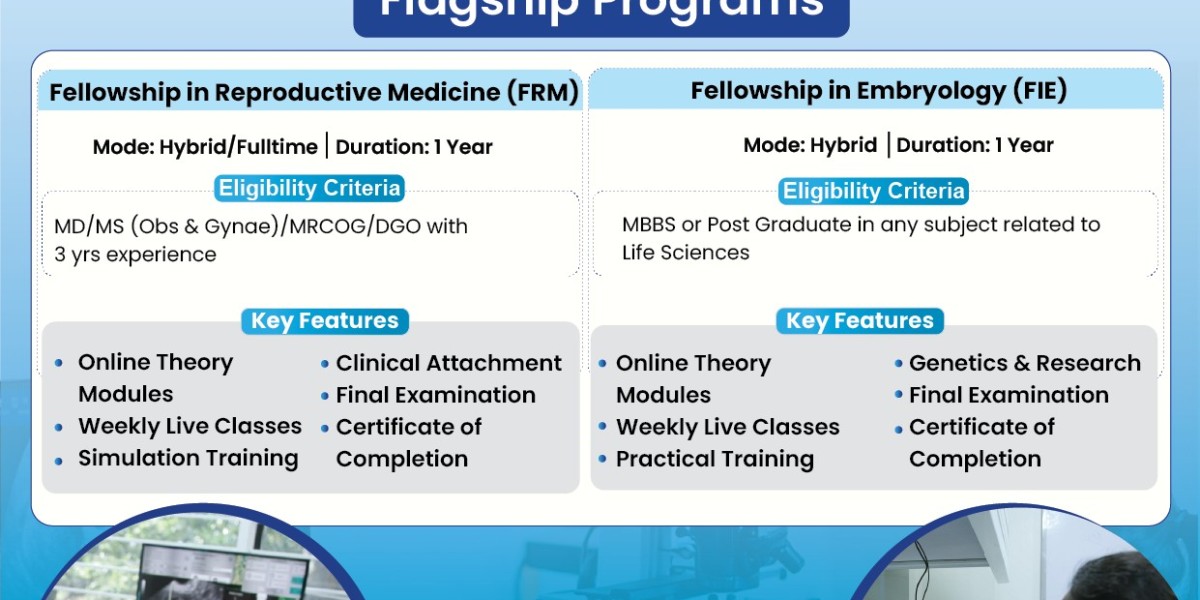
At Medline Academics, embryology is practiced not as a standard protocol but as a highly individualized science. The training approach to teaching for Fellowship in Embryology emphasizes that highly advanced techniques, such as blastocyst culture, should be used not only with an appreciation of their biological advantages but also with consideration of their potential unintended biological consequences. While the extension of culture to the blastocyst stage may enhance embryo selection in carefully selected good-prognosis patients, it may reduce the cumulative pregnancy rates in poor-prognosis patients by the potential loss of viable embryos due to extended in vitro culture. At Medline Academics, through formalized embryology courses in Bangalore, India, laboratory experience, and evidence-based clinical correlation, embryologists are taught to think critically, weighing embryo physiology, patient prognosis, and cumulative success rates rather than simply following the trends.